
The Certified Islamic Banker (CIB) is a career-focused Islamic banking certification built around structured, practical Islamic banking courses for professionals and graduates seeking applied knowledge of Shariah-compliant banking. Offered by AIMS since 2005, the CIB course develops understanding of Islamic banking operations, financial products, commercial banking practices, investment structures, and the Shariah principles that govern modern Islamic financial transactions.
- The Islamic banking courses online are delivered through a flexible learning system combining interactive 3D lectures, comprehensive study manuals, online assignments, faculty support, and a final examination.
- The program is suitable for bankers, finance professionals, graduates, and early-career learners who want a practical Islamic banking qualification with professional relevance and practical skills.
The CIB certification also supports professionals moving from conventional banking into Islamic banking by explaining how financing, deposits, investments, contracts, and other core banking activities are structured within a Shariah-compliant framework.
Certified Islamic Banker (CIB) at a Glance
| Learning Method | 100% online, flexible, and self-paced study. |
| Average Duration | Approximately 1–3 months, depending on study pace. |
| Study Requirement | Approximately 10–12 hours per week. |
| Registration Duration | 5 months of registration validity. Extensions may be available upon request. |
| Number of Courses | Three online Islamic banking courses. |
| Learning Resources | Interactive 3D lectures, comprehensive study manuals, online Islamic finance library, and academic support from Islamic banking faculty. |
| Assessment | Six online assignments followed by a final online examination. |
| Passing Requirement | A combined minimum score of 65% across the assignments and final online examination. |
| Qualification Awarded | Certified Islamic Banker (CIB). |
Key Features of the Islamic Banking Certification
Islamic Banking Courses: Objectives and Outcomes
Islamic Banking Courses in the CIB Certification
The CIB certification comprises three online Islamic banking courses covering Islamic economics, Islamic financial contracts and instruments, and Islamic commercial and investment banking. Together, these career-focused courses develop practical understanding of Shariah principles, Islamic banking products, relevant international Islamic banking standards, and their application in real banking environments.
How to Earn the Certified Islamic Banker (CIB) Certification
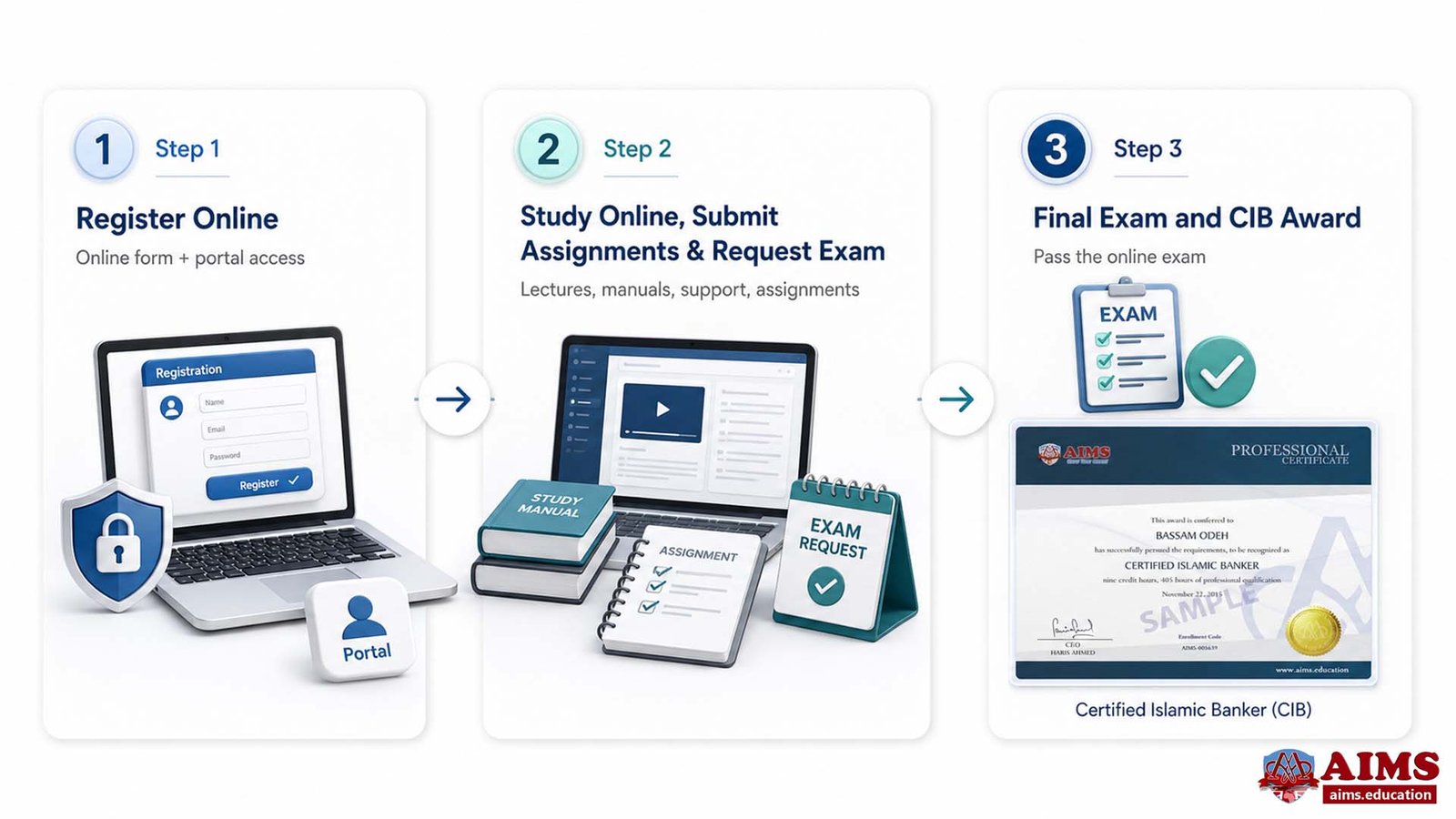
Certified Islamic Banker (CIB): Learning Experience
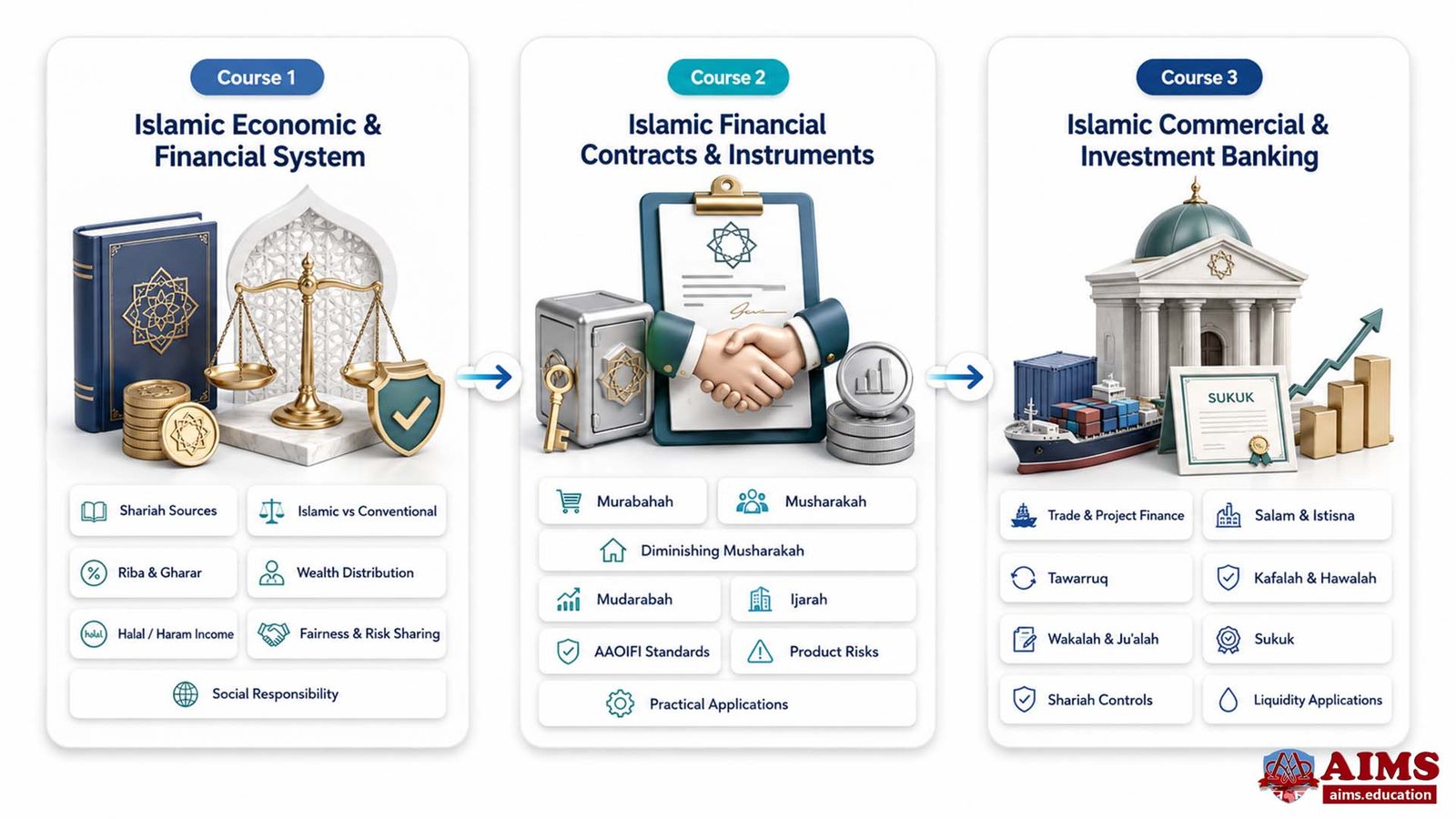
Islamic Banking Courses
Explore the three Islamic banking courses included in the CIB curriculum, progressing from Islamic economic principles and financial contracts to commercial and investment banking applications.

Demo Lecture
Watch a sample lecture to see how the Islamic banking courses online are delivered through interactive teaching, practical examples, and structured explanation.
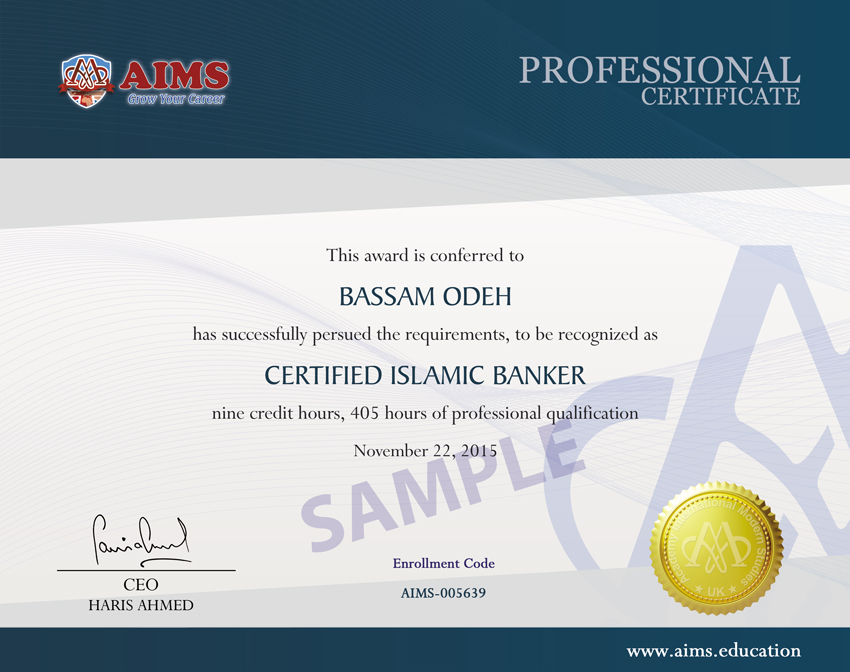
Sample CIB Certificate
View a sample of the Certified Islamic Banker certificate awarded to students who successfully complete the three courses, required assignments, and final examination.
Career Outcomes and Ideal Candidates
The Certified Islamic Banker (CIB) certification develops practical knowledge relevant to banking operations, Islamic financial products, commercial and investment banking, trade finance, customer relationships, and Shariah-compliant financial transactions. It can support professional development across Islamic banks, Islamic banking windows, financial institutions, investment organisations, and other businesses involved in Islamic financial services.
Career Opportunities with the CIB Certification
The Certified Islamic Banker (CIB) certification supports professional development for roles such as:
- Islamic Banking Officer or Executive – supporting day-to-day Islamic banking operations, customer services, financing activities, and Shariah-compliant banking transactions.
- Relationship or Branch Banking Professional – working with retail, corporate, or business banking customers and explaining appropriate Islamic banking products and financing structures.
- Islamic Banking Operations Professional – supporting the documentation, processing, administration, and operational control of Islamic financing and deposit products.
- Islamic Banking Product Development Professional – contributing to the development, documentation, implementation, and review of Shariah-compliant banking products and services.
- Trade Finance Professional – supporting Shariah-compliant import, export, documentary credit, guarantees, and other trade-related financing activities.
- Islamic Investment or Wealth Management Professional – supporting Shariah-compliant investment products, client services, and investment-related banking activities.
- Shariah Compliance or Governance Support Professional – applying knowledge of Islamic contracts and relevant Shariah standards within compliance, product review, governance, or internal control functions, subject to employer and regulatory requirements.
Who Should Take the CIB Certification?
- Banking professionals who want to transition from conventional banking into Islamic banking.
- Employees of Islamic banks and Islamic banking windows who want structured knowledge of Shariah-compliant products, contracts, and banking operations.
- Graduates and early-career professionals seeking a practical Islamic banking certification to begin or strengthen a career in Islamic banking and finance.
- Finance, accounting, audit, risk, compliance, operations, and investment professionals who need a stronger understanding of Islamic banking principles and financial structures.
- Professionals working in commercial banking, corporate banking, trade finance, investment services, or wealth management who want to understand Shariah-compliant alternatives to conventional financial products.
- Corporate and public-sector professionals who work with Islamic banks, Islamic financing arrangements, or Shariah-compliant financial transactions.
- Learners seeking an online certificate in Islamic banking that can also support progression toward more advanced qualifications in Islamic banking and finance.
International Accreditation and Recognition
The Certified Islamic Banker (CIB) certification is offered within AIMS’ established accreditation and quality framework, supporting professionally relevant Islamic banking education for learners worldwide.
- UKRLP Registration: AIMS is registered with the UK Register of Learning Providers (UKRLP) in the United Kingdom.
- Global QAHE Accreditation: AIMS is internationally accredited by the International Association for Quality Assurance in Pre-Tertiary and Higher Education (QAHE).
- CPD Accreditation in the UK: AIMS is accredited by CPD in the United Kingdom, supporting structured professional and continuing development.
- Professional Relevance: The Islamic banking certification develops practical knowledge of Islamic banking products, financial contracts, commercial and investment banking, and Shariah-compliant banking operations.
Registered in the United Kingdom with UKRLP
Globally Accredited by QAHE

UK Accredited by CPD
Hear from Our Global Learners
Apply for the Certified Islamic Banker (CIB)
The Certified Islamic Banker (CIB) is an open-enrolment Islamic banking certification available to professionals, graduates, and other learners. No prior qualification or banking experience is required; applicants only need a working knowledge of English.
How to Apply
- Review the CIB fee, scholarship, and enrolment details.
- Complete the online registration form and pay the applicable fee.
- Once registration is confirmed, receive access to the online learning system and begin the Certified Islamic Banker course.