
What is a Project Manager?
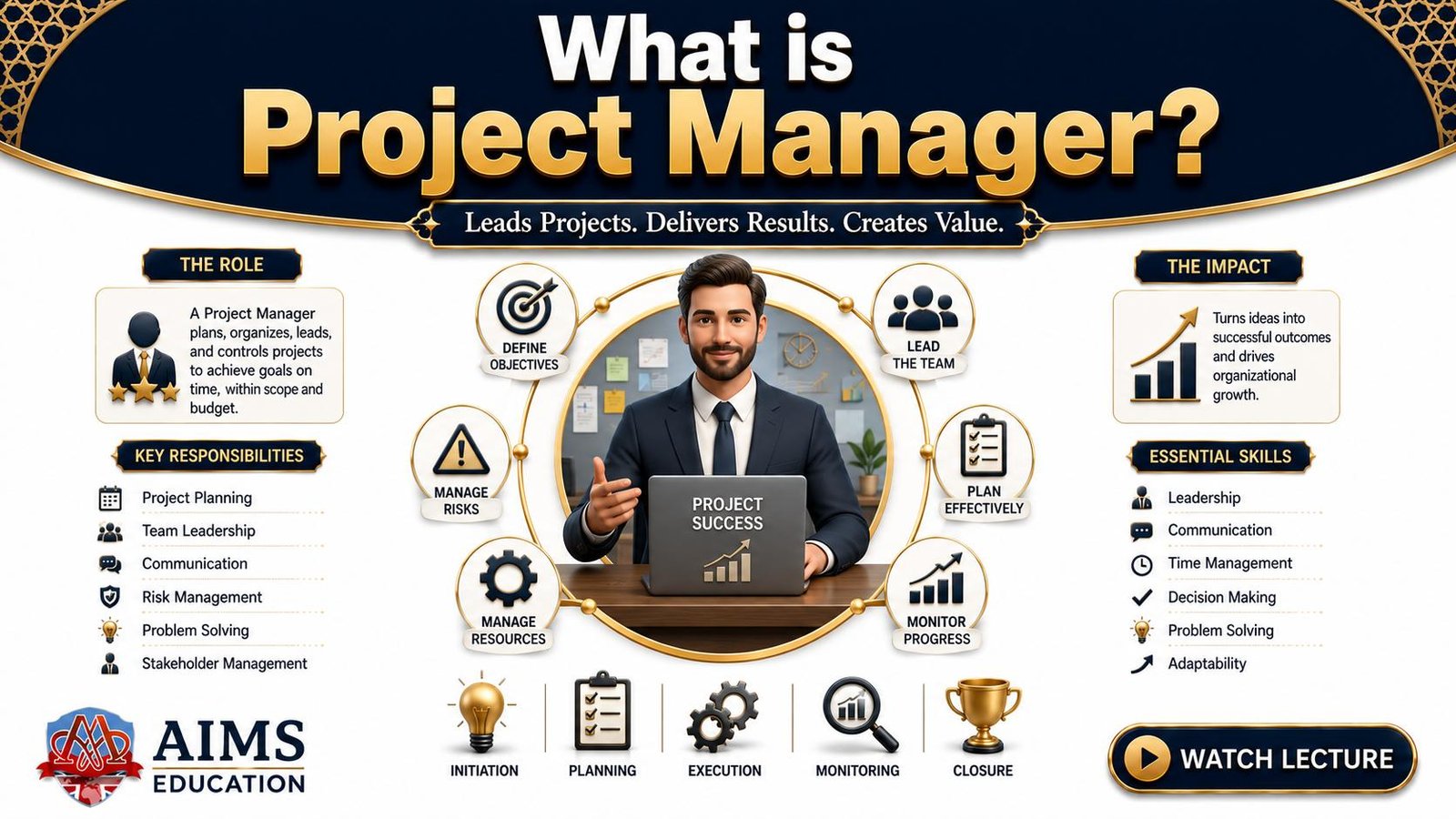
A project manager is the person assigned by an organization to lead a project team and guide the work required to achieve agreed project objectives. The role of a project manager combines planning, coordination, leadership, communication, risk control, stakeholder management, and delivery oversight so that the project produces its intended outcomes within approved constraints.
A strong project manager keeps the project aligned with scope, schedule, cost, quality, resources, risk, and stakeholder expectations. This makes the role important across construction, information technology, finance, engineering, healthcare, supply chain, education, public sector projects, and organizational change initiatives.
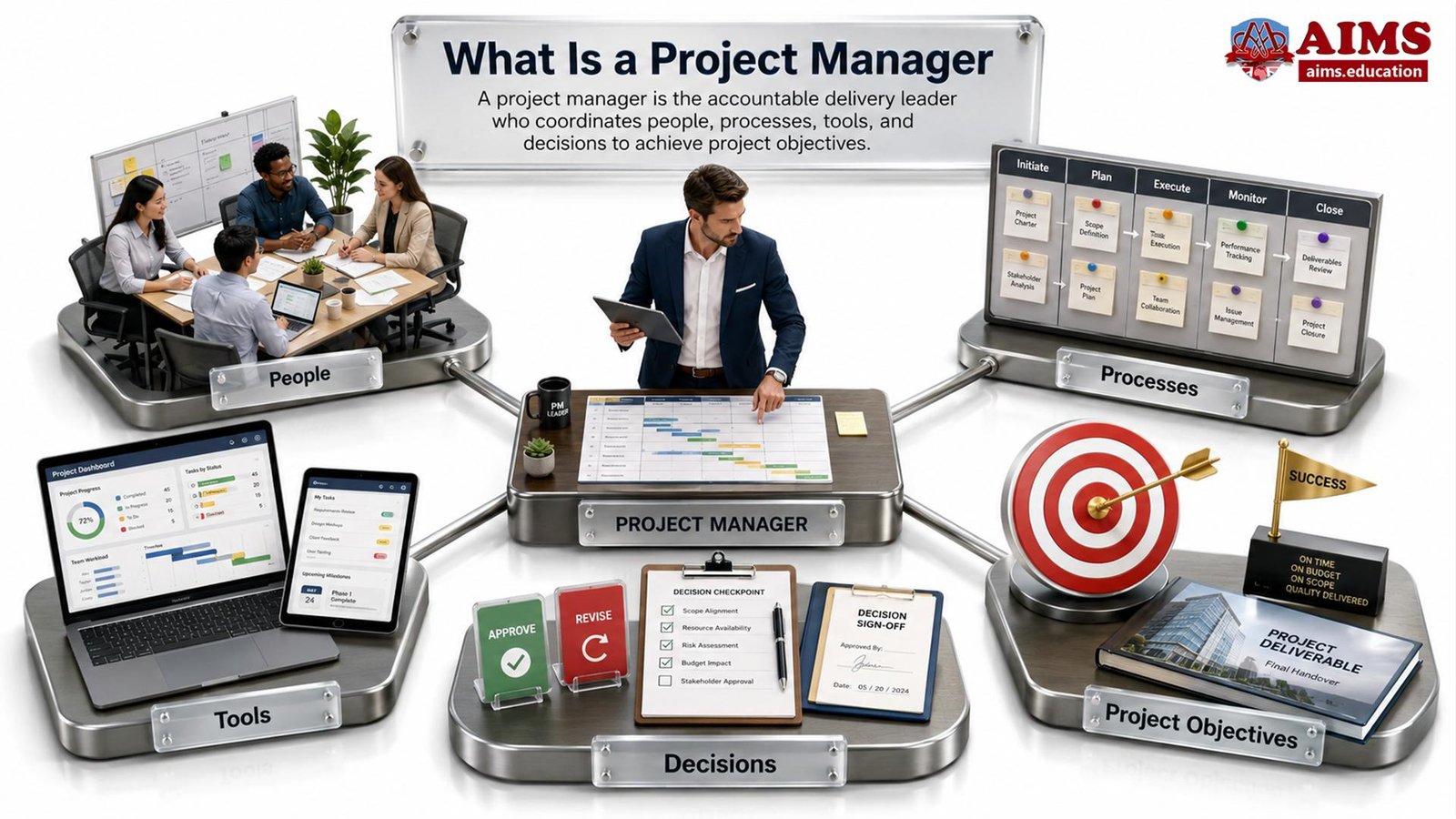
What Does a Project Manager Do
A project manager organizes the work, guides the team, communicates with stakeholders, manages problems, and helps ensure that the project reaches its agreed result.
- A project manager is the accountable delivery leader who coordinates people, processes, tools, and decisions to achieve project objectives.
- The role matters because projects are temporary, goal-driven efforts that require structure, communication, and control from initiation to closure.
For example, if an organization wants to launch a new online admissions system, the project manager does not need to write all the code, design every screen, or test every function personally. Instead, the project manager clarifies the objective, plans the work, assigns responsibilities, monitors progress, manages risks, and keeps decision-makers informed.
Project Manager Definition in Academic and Professional Terms
- A practical project manager definition is that the project manager is the person assigned by the performing organization to lead the team responsible for achieving the project objectives. This definition emphasizes assignment, leadership, team responsibility, and delivery of agreed outcomes.
- In professional practice, the project manager definition also includes the ability to apply project management processes, tools, techniques, and judgment. These may include scope statements, schedules, budgets, risk registers, communication plans, change logs, dashboards, issue logs, and closure reports.
Project manager works within a larger discipline that covers: planning, organizing, leading, monitoring, controlling, and closing project work.
Project Manager Across Industries
- In a construction company, the project manager may coordinate architects, contractors, permits, procurement, safety, and site progress.
- In an IT organization, the role may coordinate developers, testers, product owners, vendors, cybersecurity teams, and business users.
- In healthcare, the project manager may lead the implementation of a new patient record system.
- In finance, the role may coordinate a regulatory compliance project.
- In manufacturing, the project manager may manage a factory automation initiative.
Role of Project Manager
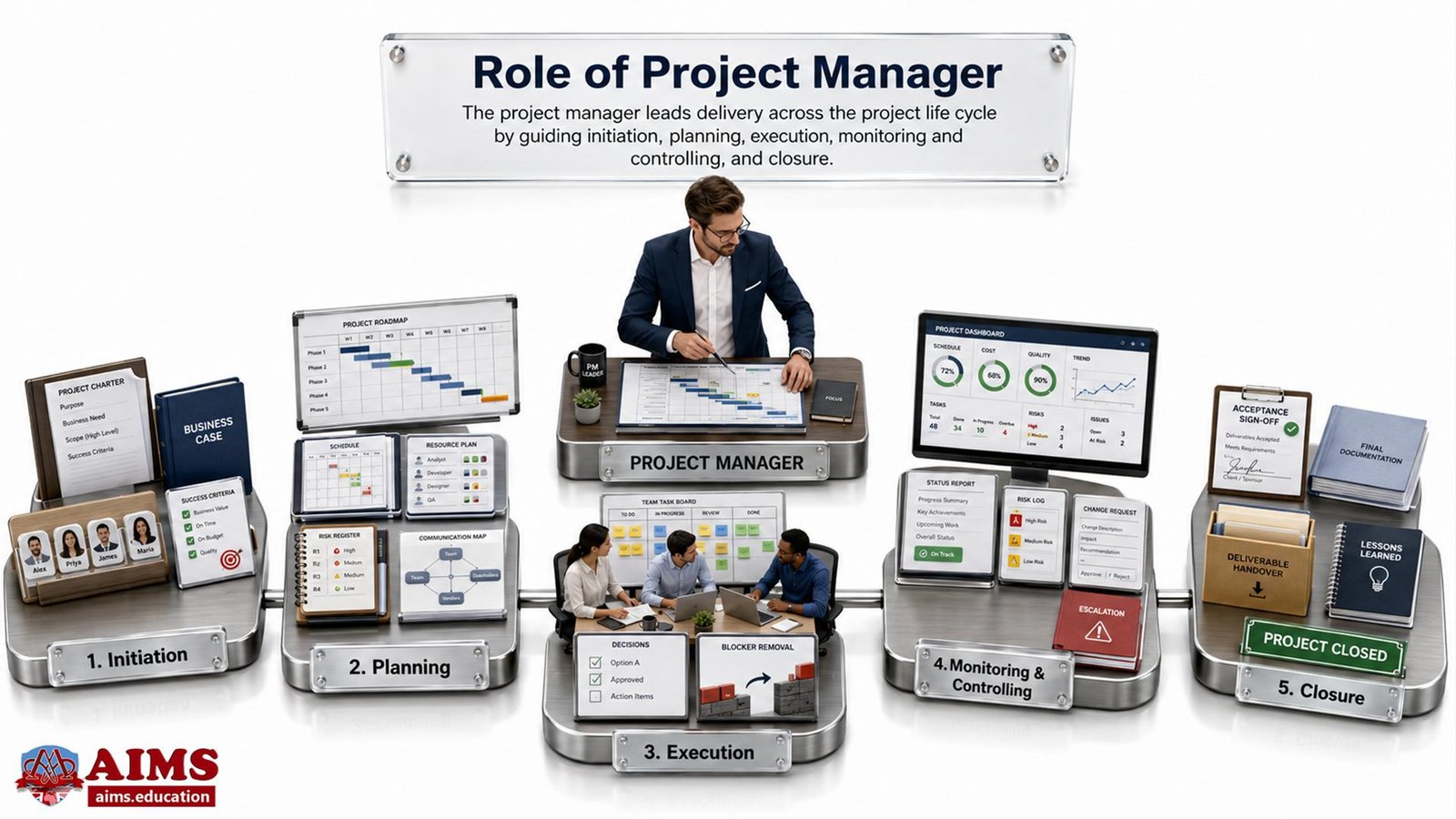
The role of project manager changes across the project lifecycle, moving from early clarification to detailed planning, execution support, performance monitoring, change control, and formal closure. Each phase requires different decisions, documents, conversations, and controls.
The Role of Project Manager From Initiation to Closure
The role of project manager begins before detailed execution.
- During initiation, the project manager helps clarify the problem, opportunity, objectives, stakeholders, assumptions, constraints, and expected benefits. This early work prevents confusion later because the team needs a shared understanding of what success means.
- During planning, the role of project manager becomes more structured. The project manager translates goals into scope, milestones, activities, responsibilities, schedules, budgets, quality criteria, communication routines, risk responses, and approval points. This is where a broad idea becomes a controlled delivery plan.
- During execution, the project manager coordinates the team, supports decision-making, removes blockers, and manages delivery activity.
- During monitoring and controlling, the project manager tracks progress, reports status, manages risks, handles changes, and escalates issues.
- During closure, the project manager confirms acceptance, completes documentation, transfers deliverables, captures lessons, and formally ends the project.
The project lifecycle phases that shape a manager’s work are explained further in the project lifecycle phases that shape a
manager’s work.
Role of Project Manager in Stakeholder Management
Stakeholder management is the disciplined process of identifying people or groups affected by the project, understanding their expectations, and managing communication so that decisions are realistic and supportable. A project manager must work with sponsors, clients, users, suppliers, functional managers, regulators, and team members.
Example:
A finance system upgrade may affect accountants, auditors, IT administrators, department managers, and senior executives. If the project manager listens only to the technical team, the system may work technically but fail operationally. Good stakeholder management protects the project from that mistake.
Role of a Project Manager Across Project Management Methodologies
- Project management methodologies influence how the project manager plans, communicates, and controls delivery.
- Predictive methods emphasize early planning and controlled baselines.
- Agile methods emphasize iterative delivery, adaptive planning, customer feedback, and team collaboration.
- Hybrid methods combine both where the environment requires flexibility and governance.
- In a traditional construction project, the project manager may rely heavily on sequential planning, design approvals, procurement schedules, and formal change control.
- In an Agile software project, the project manager may coordinate sprint planning, backlog priorities, impediment removal, stakeholder demonstrations, and iterative learning.
Modern organizations often use mixed delivery approaches. A digital transformation initiative may use Agile delivery for software development, predictive planning for infrastructure procurement, and formal governance for budget approvals. This is why effective project managers must understand project management methodologies without becoming trapped in one rigid style.
Further guidance on adaptive delivery can be found in how agile delivery changes the work of a project manager.
Project Manager Responsibilities From Planning to Delivery
Project manager responsibilities include defining scope, planning work, organizing resources, managing stakeholders, controlling time and cost, monitoring risks, assuring quality, reporting progress, handling change, and closing the project properly. These responsibilities connect strategy with practical delivery.
Project Manager Responsibilities for Scope, Deliverables, and Success Criteria
Project manager responsibilities begin with clarity. Before a team can work effectively, the project manager must help define what will be delivered, why it matters, what is excluded, who will approve the result, and how success will be measured.
Clarifying Project Scope and Expected Outcomes
Scope defines the boundaries of the project. It explains the work included, the deliverables expected, the assumptions accepted, the constraints imposed, and the exclusions that prevent uncontrolled expansion. Good scope management reduces conflict because stakeholders can see what the project is actually designed to produce.
Example:
an organization may approve a project to create a mobile learning app. The scope may include student login, course viewing, quiz access, progress tracking, and notification features. It may exclude payment processing and advanced analytics in the first release. That boundary helps the team deliver faster and reduces misunderstanding.
Translating Goals Into Milestones, Tasks, and Ownership
A project manager converts objectives into manageable work. This often involves a work breakdown structure, milestone plan, task list, responsibility assignments, dependencies, and acceptance criteria. The project manager does not merely ask people to work harder. The role is to make the work visible, sequenced, owned, and measurable.
Project Manager Responsibilities for Project Scope, Time, Cost, and Risk
Project scope, time, cost, and risk form a practical control system for delivery. A project manager must understand how these constraints interact. A change in scope may increase cost. A delay may increase risk. A budget reduction may affect quality or resource availability.
Building Schedules and Managing Dependencies
Scheduling is the process of arranging activities in a logical sequence with estimated durations, dependencies, milestones, and deadlines. The project manager watches for slippage, blocked tasks, unrealistic estimates, missing approvals, and overloaded resources.
Example:
Warehouse automation project cannot install robotic equipment before the floor layout is approved and the electrical work is complete. If the electrical contractor is delayed by two weeks, the project manager must update the schedule, communicate impact, adjust dependent tasks, and escalate where needed.
Managing Quality, Resources, and Delivery Constraints
Quality management ensures that deliverables meet agreed standards and acceptance criteria. Resource management ensures that people, budget, equipment, information, and time are available when needed. Delivery constraint management requires balancing scope, schedule, cost, quality, resources, and risk without pretending that one factor can change without affecting the others.
Project Manager Responsibilities Regarding Communication, Reporting, and Change Control
- Communication is one of the most visible project manager duties. The project manager keeps the team aligned, ensures stakeholders receive the right information, and prevents small misunderstandings from becoming major delivery problems.
- Reporting should be honest, timely, concise, and decision-focused.
- Change control is equally important. Projects rarely proceed exactly as planned, but uncontrolled change can damage scope, schedule, budget, and quality. The project manager should assess the impact of change requests, seek approval through the agreed process, update baselines, and communicate decisions clearly.
| RESPONSIBILITY | PRACTICAL ARTIFACT | WHY IT MATTERS |
|---|---|---|
| Scope Definition | The project manager prepares or coordinates a scope statement, deliverable list, assumptions, exclusions, and acceptance criteria. | It prevents unclear expectations and reduces the risk of uncontrolled scope growth. |
| Scheduling | The project manager uses milestone plans, Gantt charts, sprint plans, dependency maps, or release plans. | It helps the team understand sequence, timing, deadlines, and critical dependencies. |
| Risk Management | The project manager maintains a risk register with owners, probability, impact, responses, and review dates. | It helps the team anticipate problems before they damage delivery. |
| Stakeholder Communication | The project manager uses communication plans, status reports, meeting notes, dashboards, and decision records. | It keeps sponsors, users, clients, and team members aligned around facts and actions. |
| Closure | The project manager coordinates acceptance records, handover documents, lessons learned, and final reports. | It ensures the project ends properly and creates learning for future projects. |
What Does a Project Manager Do Day to Day
A project manager plans priorities, checks progress, resolves issues, supports the team, communicates with stakeholders, updates documents, reviews risks, manages changes, and reports performance so that the project remains controlled and purposeful.
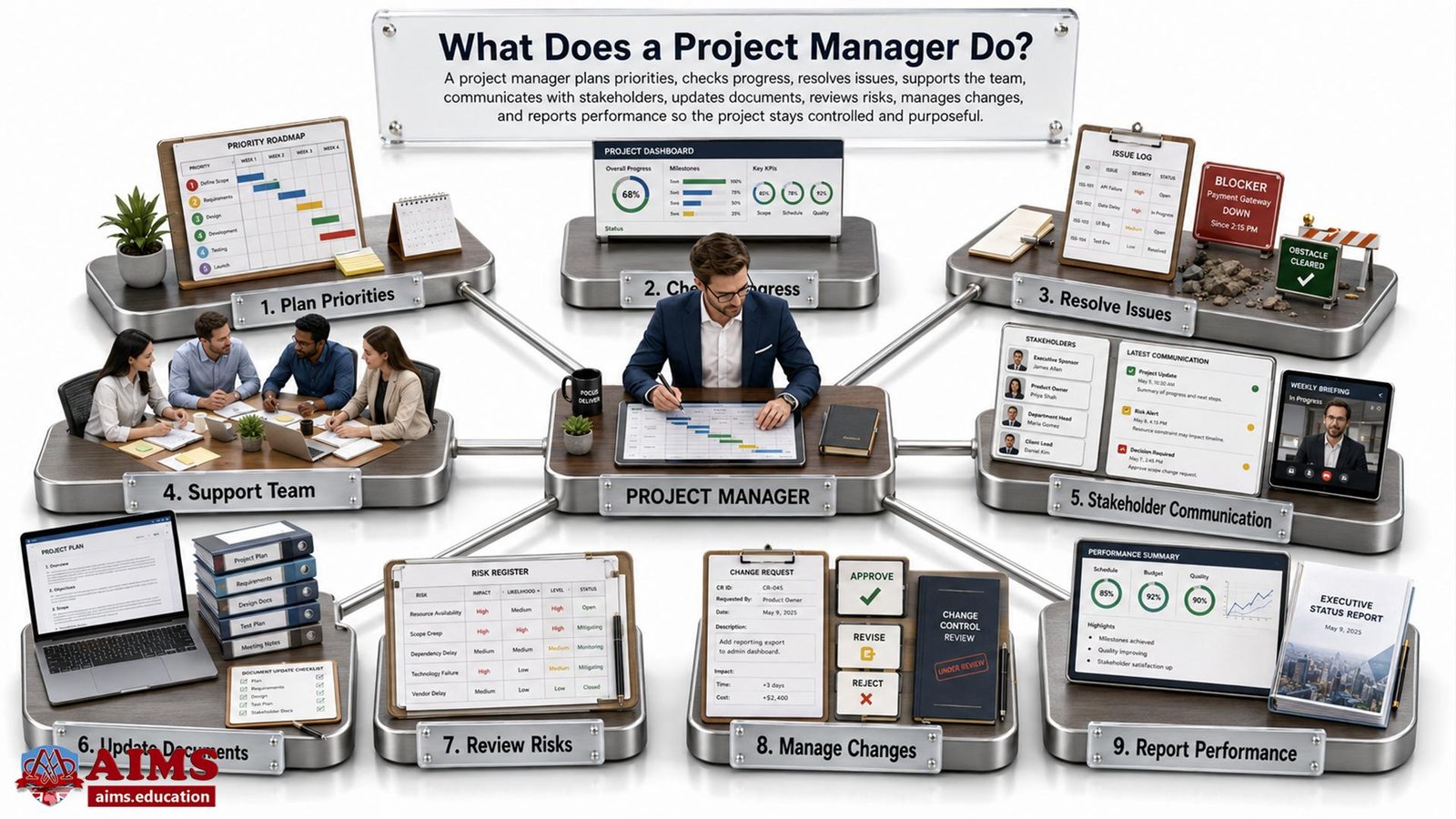
Meetings, Prioritization, and Issue Resolution
The question what does a project manager do is often answered through daily routines. A typical day may include a team meeting, a schedule review, stakeholder calls, issue escalation, risk review, supplier follow-up, document updates, and decisions about priorities.
However, good project managers do not fill the day with meetings for their own sake. They use meetings to remove uncertainty, confirm ownership, solve problems, and help people act. A short meeting that clarifies priorities is valuable. A long meeting without decisions is wasteful.
Documentation, Dashboards, and Status Reporting
Documentation gives the project memory. It records decisions, scope changes, risks, issues, approvals, assumptions, lessons, and delivery evidence. Without documentation, the project depends too heavily on memory and informal conversations.
Work Breakdown Structures, Gantt Charts, and KPIs
A work breakdown structure divides project work into manageable components. A Gantt chart shows activities, timing, dependencies, and progress. Key performance indicators show whether the project is moving toward planned outcomes. The project manager selects the right tools based on the project’s size, method, complexity, and governance needs.
Stakeholder Updates, Action Logs, and Decision Records
Status reporting should answer three practical questions: Where are we now, what needs attention, and what decisions are required? Action logs identify owners and deadlines. Decision records prevent repeated debate. These tools help the project manager keep communication disciplined rather than scattered.
For example, a project manager leading a new student portal may report that login development is complete, payment integration is delayed by vendor approval, testing will start next Monday, and the steering group must decide whether to launch without one optional reporting feature. The report becomes useful because it connects facts with action.
Key Project Manager Duties and Required Skills
Project manager duties and required skills include leadership, communication, planning, negotiation, decision-making, problem-solving, conflict management, stakeholder awareness, business understanding, and practical use of project tools. These skills help the project manager guide people and control work in real situations.
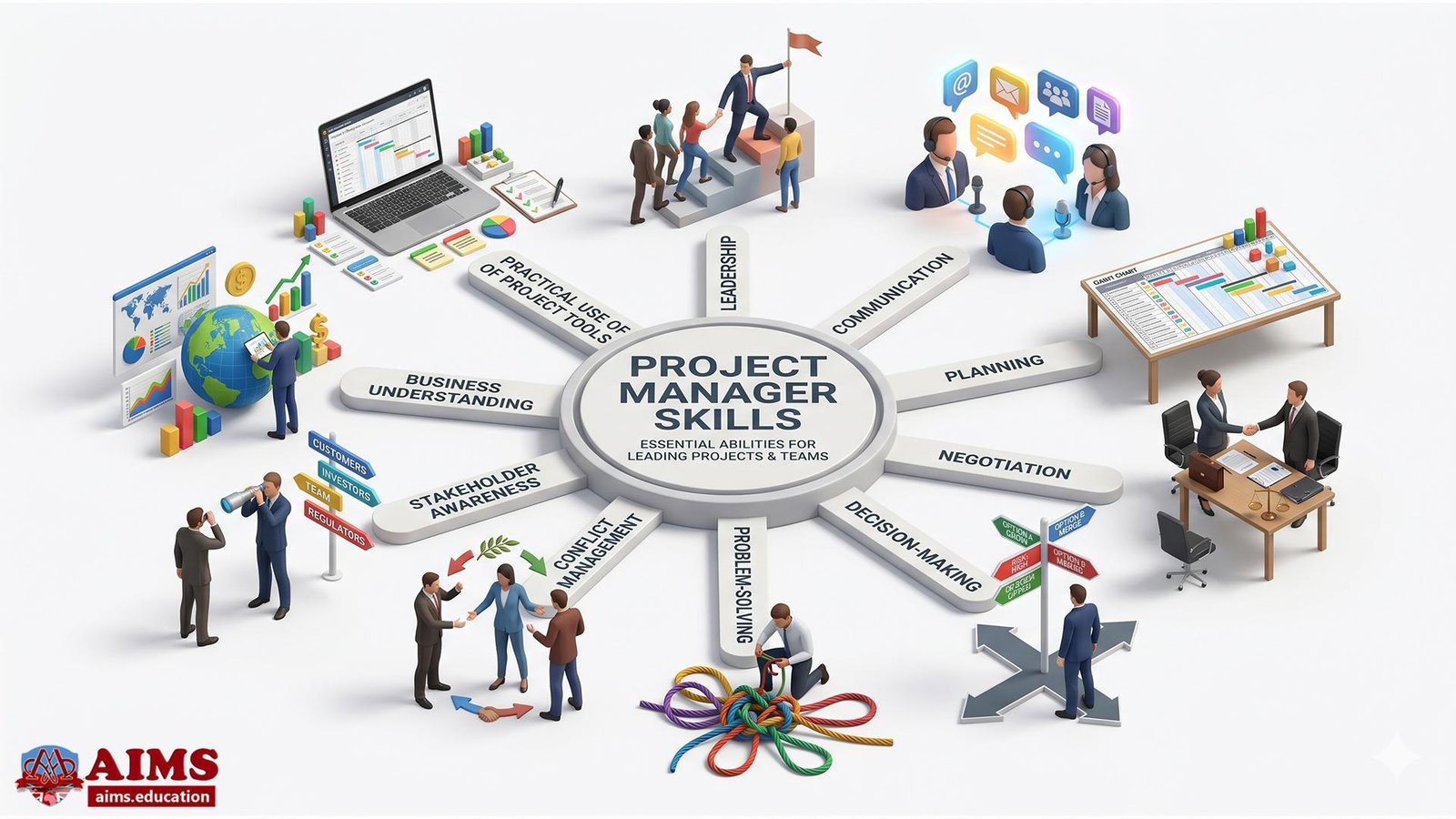
Leadership, Communication, Negotiation, and Problem-Solving
The core project manager skills are not only technical. Project managers accomplish work through other people, so they need strong human relations skills.
- They must provide direction, build trust, motivate different personalities, negotiate priorities, manage conflict, influence without excessive authority, and maintain a constructive working environment.
- Communication is especially important because the project manager often becomes the central hub between the sponsor, team, client, vendors, users, and governance bodies. Poor communication causes duplicated work, hidden risks, late decisions, and stakeholder frustration.
Technical, Business, and Interpersonal Project Manager Skills
Project managers may have technical expertise, but technical mastery is not always the main requirement.
- A software project manager benefits from understanding software delivery, but the team should include specialist developers, architects, testers, and security experts.
- The project manager must know enough to ask intelligent questions, manage dependencies, and protect delivery quality.
- Business skills help the project manager understand value, benefits, priorities, cost implications, and strategic alignment.
- Interpersonal skills help the project manager lead teams, resolve disputes, coach individuals, build morale, and maintain stakeholder confidence.
The core project management skills effective managers rely on are discussed further in the core project management skills effective managers rely on.
Project Manager Examples Across IT, Construction, Engineering, Finance, and Operations
Project manager examples across industries show why the role should not be seen as a software-only position. The same delivery logic appears in many sectors, although the language, tools, risks, and regulations may differ.
- In IT, Alex coordinates developers, testers, cybersecurity reviewers, and business users to launch a customer portal in three releases.
- In construction, Nichole manages contractors, inspections, procurement, site risks, and budget controls for a commercial building renovation.
- In engineering, Omar coordinates design reviews, technical approvals, procurement lead times, safety checks, and client acceptance for a plant upgrade.
- In finance, Grace manages a compliance project that requires legal review, system changes, staff training, audit evidence, and executive sign-off.
- In operations, David leads a warehouse improvement project that reduces picking errors by redesigning workflows, training staff, and tracking quality metrics.
These examples show that project manager responsibilities are practical and cross-functional. The project manager brings order to temporary work where many people, decisions, constraints, and risks must be coordinated.
Project Manager vs Program Manager and Other Related Roles
A project manager leads a defined project, while related roles such as program manager, product manager, project coordinator, and PMO support serve different purposes. Confusing these roles can lead to weak governance, unclear authority, and unrealistic expectations.
Project Manager vs Program Manager
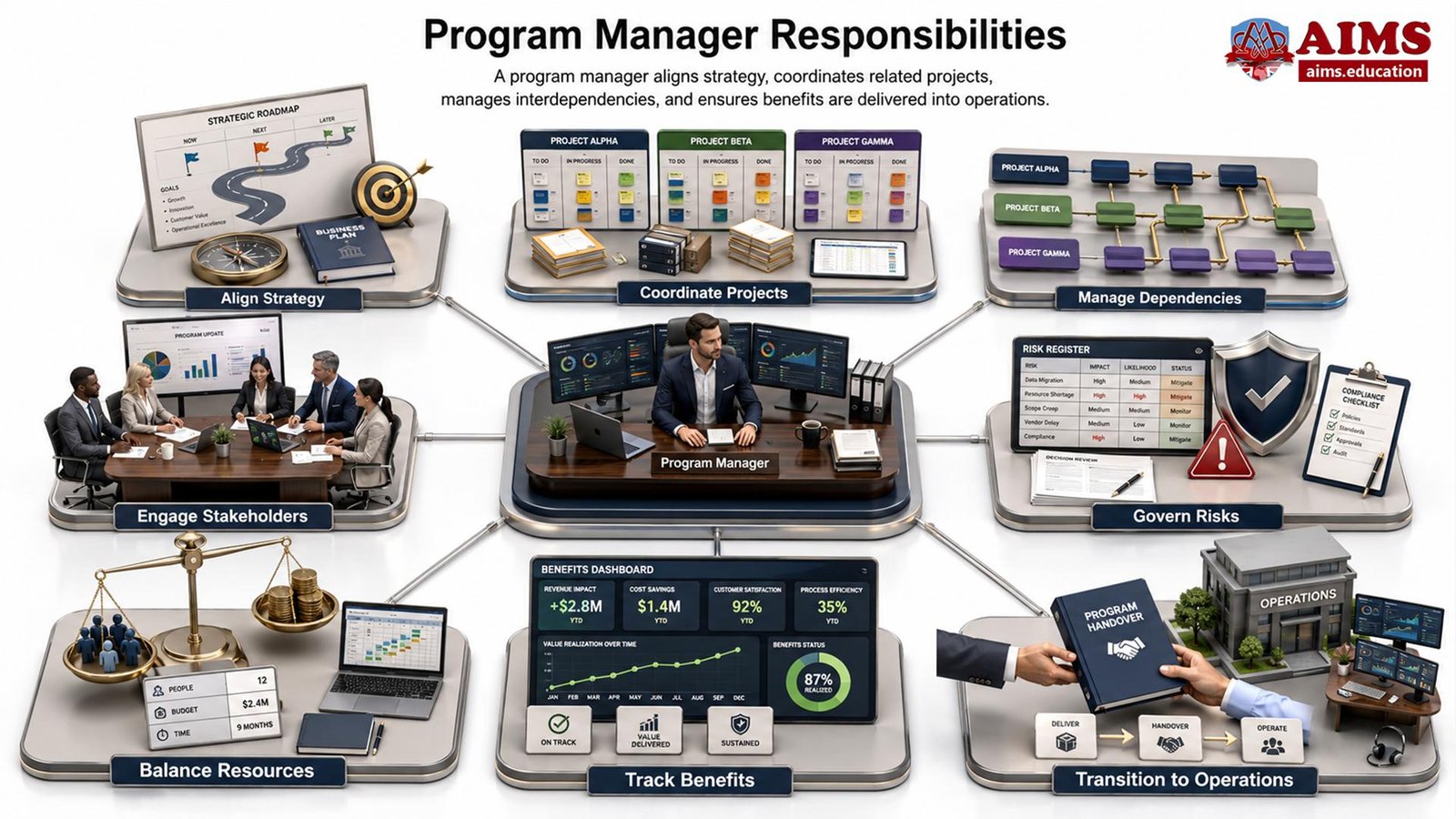
Project manager vs program manager is one of the most common comparisons. A project manager focuses on delivering a specific project with defined objectives, scope, schedule, cost, risks, and deliverables. A program manager oversees multiple related projects and activities that together create broader benefits.
The difference matters because program managers often deal with strategic alignment, benefits realization, inter-project dependencies, and business outcomes across a larger initiative. Project managers focus more directly on the successful delivery of a single project or work package.
A detailed explanation is available in how project managers differ from program managers in practice.
Project Manager vs Product Manager
A product manager focuses on the product’s vision, customer value, market fit, features, roadmap, and life cycle. A project manager focuses on how approved work will be delivered within project constraints. Product management may initiate projects at different points in a product life cycle, such as introduction, growth, maturity, revision, or retirement.
In a digital learning platform, the product manager may decide that students need faster quiz access and mobile progress tracking. The project manager then plans and coordinates the approved project to deliver those capabilities, managing scope, schedule, resources, risks, quality, and stakeholder communication.
Project Manager vs Project Coordinator or PMO Support
A project coordinator usually supports administration, scheduling, documentation, meeting coordination, and tracking. PMO support may provide templates, governance standards, reporting processes, and portfolio visibility. The project manager has broader responsibility for leading delivery, managing stakeholder expectations, handling risks, resolving issues, and achieving agreed project objectives.
| ROLE | PRIMARY FOCUS | MAIN ACCOUNTABILITY | COMMON OUTPUT |
|---|---|---|---|
| Project Manager | The role focuses on delivering a specific project within approved objectives and constraints. | The project manager is accountable for planning, coordination, communication, risk handling, and delivery control. | The output is an accepted project deliverable, outcome, or change. |
| Program Manager | The role focuses on coordinating multiple related projects to achieve broader benefits. | The program manager is accountable for benefits, dependencies, alignment, and cross-project coordination. | The output is a set of coordinated benefits and strategic outcomes. |
| Product Manager | The role focuses on product vision, customer value, feature priorities, and the product life cycle. | The product manager is accountable for what should be built and why it matters to users and the organization. | The output is a product roadmap, prioritized features, and product value direction. |
| Project Coordinator | The role focuses on administrative support, documentation, scheduling, and follow-up. | The coordinator supports the project manager by keeping records, actions, meetings, and updates organized. | The output is cleaner coordination, documentation, and reporting support. |
How Organizational Structure Affects the Role of Project Manager
Project management organizational structure affects the role of project manager by shaping authority, resource access, reporting lines, and decision speed. A project manager in a functional structure may have limited authority, while one in a project-oriented structure may control more resources directly.
- In an organic or simple structure, people may work flexibly side by side, but project manager authority is often low. In a functional structure, work is completed inside departments such as engineering or manufacturing, and the project manager may act part-time or as a coordinator.
- Matrix structures create shared authority between functional managers and project managers. In a weak matrix, the project manager has limited authority. In a balanced matrix, authority is shared. In a strong matrix, the project manager usually has moderate to high authority and may hold a full-time designated role.
- In a project-oriented structure, the work is organized around projects, resource availability is usually higher, and the project manager has high to almost total authority.
- In virtual, network, or hybrid structures, authority and resource access can vary, so communication discipline becomes even more important.
| STRUCTURE | PROJECT MANAGER AUTHORITY | RESOURCE AVAILABILITY | PRACTICAL EFFECT |
|---|---|---|---|
| Functional | Authority is usually low because work is controlled mainly by functional departments. | Resource availability is usually low because people remain assigned to departmental priorities. | The project manager often coordinates rather than directly controls work. |
| Weak Matrix | Authority remains low because functional managers retain significant control. | Resource availability is usually low and must be negotiated carefully. | The project manager needs strong influence and communication skills. |
| Balanced Matrix | Authority is low to moderate because control is shared between project and functional leadership. | Resource availability is low to moderate and requires active coordination. | The project manager must manage shared accountability and competing priorities. |
| Strong Matrix | Authority is moderate to high because the project manager has a stronger designated role. | Resource availability is moderate to high compared with weaker structures. | The project manager can lead more actively but still coordinates with functional managers. |
| Project-Oriented | Authority is high to almost total because the organization is arranged around project work. | Resource availability is usually high to almost total for the project. | The project manager has stronger control over delivery decisions and team direction. |
| Hybrid or Virtual | Authority is mixed and depends on governance, contracts, reporting lines, and culture. | Resource availability is mixed and often distributed across locations or organizations. | The project manager must manage clarity, communication, and coordination with extra care. |
How to Become a Project Manager and Build Relevant Qualifications
Becoming a project manager usually involves combining practical experience, structured learning, project management tools, leadership development, and recognized qualifications. People enter the role from operations, engineering, IT, construction, finance, administration, consulting, supply chain, and many other professional backgrounds.
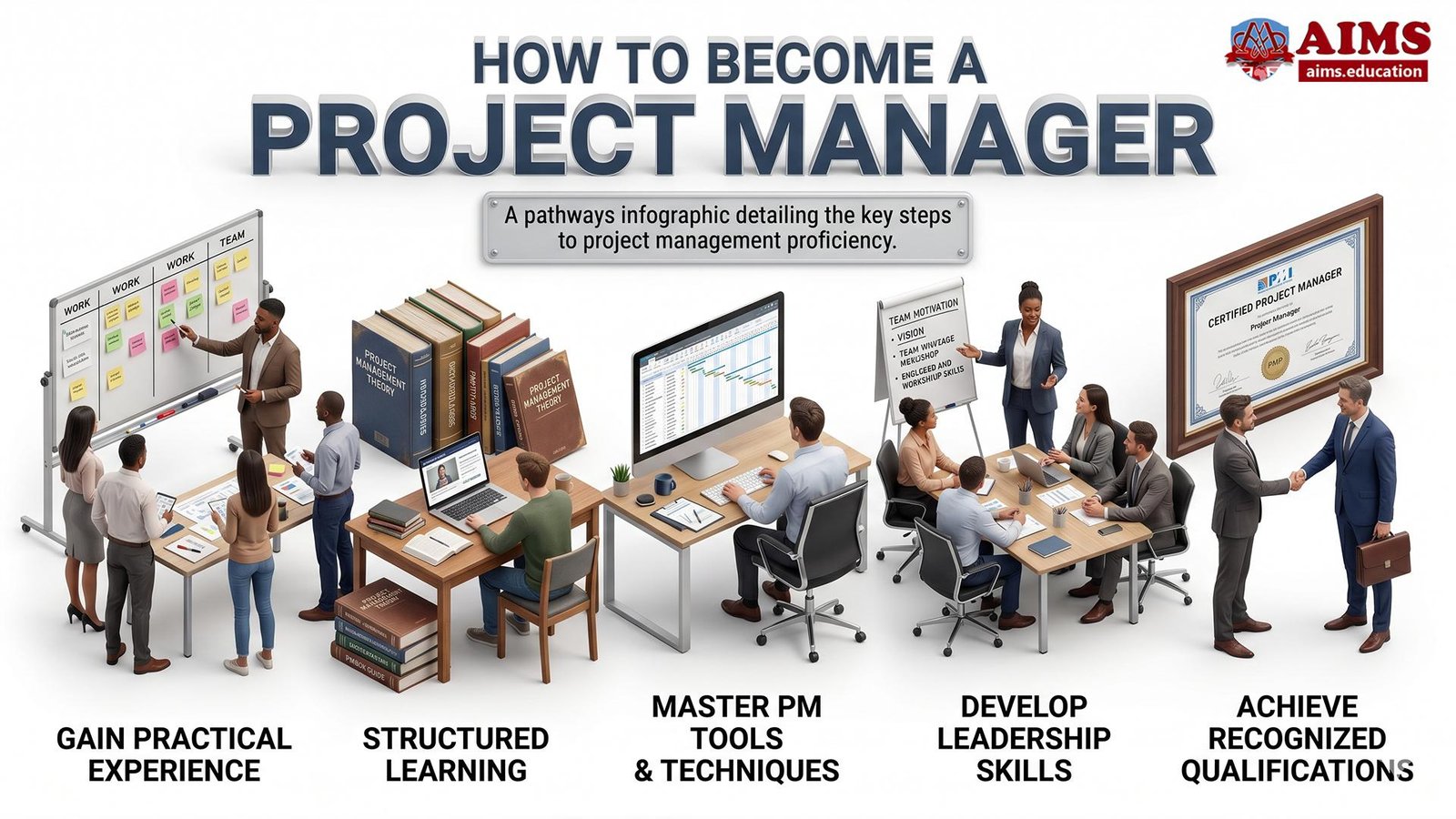
Entry Routes Into the Profession
There is no single route into project management. Some professionals begin as project coordinators, team leaders, analysts, engineers, administrators, consultants, or operations supervisors. Others move into project work after leading change initiatives inside their departments.
The phrase how to become a project manager should not be reduced to certification alone. A credible pathway includes learning project principles, assisting with real project tasks, documenting experience, building communication skills, understanding risk and stakeholder management, and gradually taking responsibility for larger work packages.
Project Manager Qualifications, Certifications, and Continuing Development
Project manager qualifications help professionals structure their knowledge and demonstrate readiness for project responsibilities. Qualifications may cover scope, scheduling, budgeting, risk, quality, procurement, stakeholder communication, Agile delivery, governance, leadership, and project closure.
A formal learning route can support people who want structured progression. For example, professionals seeking a higher management pathway may consider a structured route to an online Executive MBA in Project Management. Those seeking focused professional certification may explore a formal Certified Project Manager (CPM) certification with PMP Training.
Continuing professional development is also essential. Project managers should keep improving their understanding of delivery methods, digital collaboration tools, data-driven reporting, governance, conflict resolution, hybrid delivery, and industry-specific practices.
Limits and Misconceptions About the Project Manager Responsibilities
A project manager can strongly influence project success, but cannot control every factor alone. Sponsors, governance bodies, functional managers, suppliers, clients, users, and team members all share responsibility for decisions, resources, quality, approvals, and organizational support.
What a Project Manager Can Control and What They Cannot
A project manager can control planning discipline, communication rhythm, issue visibility, risk reviews, escalation, coordination, documentation, and delivery focus. A project manager cannot fully control market shocks, executive delays, supplier failure, unrealistic budgets, missing strategic clarity, or organizational politics.
This is why mature project management requires governance. Sponsors must make timely decisions, provide resources, remove organizational barriers, and accept accountability for business outcomes. The project manager guides the delivery process, but success is shared.
Why Project Success Is Shared With Sponsors, Teams, and Governance
A project may fail even when the project manager works hard if the sponsor does not approve decisions, the team lacks resources, requirements are unstable, or governance ignores risks. Conversely, a capable sponsor and strong team can help the project manager recover from problems more effectively.
Misconceptions That Oversimplify the Project Manager Role
Several misconceptions create confusion. One misconception is that the project manager performs all technical work. In reality, the project manager coordinates specialist work and relies on technical experts. Another misconception is that the project manager is only a scheduler. Scheduling matters, but the role also includes leadership, risk, communication, quality, change, and stakeholder management.
A third misconception is that project management belongs only to IT. Project manager examples across industries show that the role is equally relevant in construction, engineering, finance, healthcare, education, logistics, public services, and organizational transformation.
A project manager does not replace the team, the sponsor, or the governance structure. The project manager connects them so that decisions, work, risks, and outcomes remain aligned.
FAQ About the Project Manager Role
These answers clarify the most common questions about project manager responsibilities, skills, lifecycle involvement, qualifications, and related roles. Each answer is written to give a direct explanation while avoiding the common mistake of reducing project management to scheduling alone.
What Is a Project Manager?
A project manager is the person assigned to lead a project team and coordinate the work needed to achieve project objectives. The role includes planning, organizing, communicating, managing stakeholders, controlling risks, monitoring progress, handling change, and guiding the project toward accepted deliverables.
What Is Project Manager in Simple Words?
What is project manager in simple words means asking what the person actually does. A project manager is the person who organizes people, tasks, time, money, risks, and communication so that a project can move from an idea to a completed result.
What Is the Project Manager Definition Used in Modern Practice?
The project manager definition used in modern practice describes a person assigned by an organization to lead the team responsible for achieving project objectives. This includes applying project management knowledge, tools, techniques, leadership behavior, and performance skills throughout the project lifecycle.
What Is the Role of Project Manager During a Project?
The role of project manager is to provide direction, structure, communication, and control. The project manager clarifies objectives, plans the work, manages resources, monitors performance, handles risks and issues, supports the team, reports progress, and ensures that deliverables meet agreed requirements.
What Are the Most Important Project Manager Responsibilities?
The most important project manager responsibilities include defining scope, planning schedules, managing resources, communicating with stakeholders, controlling costs, managing risks, assuring quality, documenting decisions, handling change requests, reporting progress, resolving issues, and closing the project properly.
What Does a Project Manager Do Every Day?
What does a project manager do every day? The project manager reviews priorities, checks task progress, removes blockers, updates schedules, communicates with stakeholders, manages risks, reviews issues, prepares reports, follows up on decisions, and helps the team stay focused on agreed outcomes.
Is a Project Manager the Same as a Program Manager?
No, a project manager is not the same as a program manager. A project manager leads a specific project with defined deliverables, while a program manager coordinates multiple related projects and activities to achieve broader strategic benefits.
Is a Project Manager the Same as a Product Manager?
No, a project manager is not the same as a product manager. A product manager focuses on product vision, customer value, features, and life cycle direction. A project manager focuses on delivery planning, coordination, scope, schedule, cost, risk, quality, and stakeholder communication.
Can a Project Manager Work in Agile and Waterfall Environments?
Yes, a project manager can work in Agile, Waterfall, and hybrid environments. The role changes according to the delivery approach. Predictive projects need strong upfront planning and control, while Agile projects require iterative coordination, rapid feedback, collaboration, and adaptive planning.
Does the Project Manager Do All the Technical Work?
No, the project manager does not personally complete every technical task. Technical specialists perform specialist work. The project manager coordinates the team, manages dependencies, resolves issues, communicates progress, handles risks, and ensures that technical work supports the agreed project objectives.
What Skills Does a Project Manager Need Most?
A project manager needs leadership, communication, planning, negotiation, decision-making, stakeholder management, conflict resolution, problem-solving, risk awareness, business understanding, and practical knowledge of project tools. The best project managers combine structure with judgment and people-centered leadership.
How Do Project Manager Qualifications Help Someone Enter the Field?
Project manager qualifications help learners understand core methods, terminology, tools, and responsibilities. They also provide structured evidence of learning in areas such as scope, scheduling, risk, cost, quality, stakeholder communication, Agile delivery, and project leadership.
Conclusion
A project manager is the delivery leader who turns objectives into organized work and helps teams achieve project outcomes through planning, communication, coordination, leadership, and control. The role is broad, practical, and increasingly important across industries because organizations rely on projects to create change, value, and strategic progress.
The strongest project managers understand both structure and people. They manage scope, time, cost, quality, resources, and risk, but they also build trust, support teams, communicate clearly, and help stakeholders make better decisions. That balance is what makes the role essential in modern organizations.
About AIMS’ Institute of Project Management
AIMS’ Institute of Project Management has delivered project management education since 2005 to learners worldwide through internationally standardized, career-focused curriculum, qualified faculty, industry-oriented teaching, practical skill development, 3D interactive learning content, and real-world case studies. This educational content, along with AIMS’ study content and curriculum, is collaboratively developed and rigorously peer-reviewed by an academic board of qualified industry practitioners. These strengths support job-ready qualifications in project, program, and project portfolio management. Explore career-focused project management qualifications from AIMS.